

CEE/Newsletter
| Home | About | Archives | Subscribe | Newsroom |

| CEE Newsletter |
|---|
| Subscribe |
| About |
| Volume 4 (2024) |
| Volume 3 (2023) |
| Volume 2 (2018) |
| Volume 1 (2017) |
Editorial: Fostering Collaboration and Celebrating Progress in the CEE Region
Welcome to the March issue of the CEE Newsletter! We are happy to bring you an array of inspiring stories, community updates, and collaborative initiatives.
- CEE Hub Updates
Join us on a journey to Cyprus as we explore the empowering journey of the Wikimedia Community User Group Cyprus and the pivotal role played by the CEE Hub in supporting their endeavors. Barbara Klen and Philip Kopetzky provide insights into the journey of building bridges and empowering Wikimedians in Cyprus. Additionally, learn about the CEE Hub's involvement in the externally funded project, 'Heritage Guard Network,' aimed at safeguarding cultural and natural heritage in danger.
- International Updates
Discover the latest developments and upcoming events in the international Wikimedia space. Toni Ristovski keeps you informed about the exciting news and events shaping the Wikimedia movement for the rest of the year.
- CEE in the News
Find out what other newsletters are saying about the remarkable achievements and initiatives emerging from the CEE region. Toni Ristovski presents a summary of articles from This month in Education and This month in GLAM, showcasing the impact of CEE communities in global education and cultural sectors.
- Reader’s Digest
Stay informed about important topics from around the globe with insights from the Diff Blog, presented by Toni Ristovski. Explore open calls and consultations and voice your opinion on various topics shaping the Wikimedia landscape.
- Updates from Communities
From Wiki Loves Earth 2024 invitations to celebrations of Ukrainian Wikipedia's 20th anniversary, delve into the vibrant activities of CEE communities. Explore initiatives like the 1lib1ref campaign in Romania, Wikipedia 201 education sets in Turkey, and the celebration of International Women’s Day by Wikimedia MKD.
Discover unique initiatives such as the Friendship Edit-a-thon between Japan and Turkey, the Northwest Odyssey preserving the heritage of Northwestern Russia, and the HERitage Amplified event organized by the Wikimedia Community Cyprus.
Explore topics like SLAPPs against CEE and initiatives like University Students' Internships at Wikimedia Armenia, aimed at overcoming challenges and promoting diversity within the Wikimedia movement.
Learn about Wikipedia in education initiatives in Albania, including updates on University Students' Internships, Wikipedia within the education setting, and WikiGap Tirana event celebrating women in entrepreneurship.
We hope you find inspiration and insight in the pages of this newsletter, and we look forward to continuing this journey together!
Jan Beránek
editor of the CEE Newsleter

- By: Barbara Klen and Philip Kopetzky
Learn more about the journey of the Wikimedia Community User Group Cyprus and how the CEE Hub support them during the process.
While the Cypriot community has always been one of the Central and Eastern Wikimedian communities that the CEE Hub should support, our initial attempts to connect with any active members of the community proved unsuccessful. We didn't find out about Anna Prodromou from Cyprus until after one of our sessions with the Greek Wikipedia community. Although we lacked specific details, we were keen to communicate and learn more about Wikimedian endeavours in Cyprus. Our first online encounter with Anna was in the summer of 2023, not long after we exchanged emails, and we are thrilled to report how much has happened since then.
While the Cypriot community has always been one of the Central and Eastern Wikimedian communities that the CEE Hub should support, our initial attempts to connect with any active members of the community proved unsuccessful. We didn't find out about Anna Prodromou from Cyprus until after one of our sessions with the Greek Wikipedia community. Although we lacked specific details, we were keen to communicate and learn more about Wikimedian endeavours in Cyprus. Our first online encounter with Anna was in the summer of 2023, not long after we exchanged emails, and we are thrilled to report how much has happened since then.
Shortly after our first meeting and brainstorming session regarding opportunities and possible activities, Anna and a few other community members made the decision to apply for Rapid Grants in order to obtain the funding required for planning a larger community event. We were excited about this as well because this diverse group embodies the spirit of Wikimedia in its mission to transcend boundaries by bringing together Greek- and Turkish-speaking Wikipedians to collaborate on information creation. The group's long-term objectives were fully aligned with the theme selection for both their first rapid grant and their first public event, which honoured Cypriot women regardless of where on the island they were from.
This (rapid) grant application procedure was supported by the CEE Hub, and we were overjoyed when the project was approved in the fall of 2023. Aside from this, we held a few other virtual meetings with Cypriot Wikipedians when the subject of their official status was raised. During the group's application process to AffCom, we were able to advise and assist them, and we are currently waiting for AffCom's decision.
In addition to resolving a few technical issues, we were also able to assist with the implementation of the awarded rapid grant by enabling two members of the CEE Hub to attend the HERitage Amplified event that took place in February in Nicosia, Cyprus. A Wikipedia Marathon (edit-a-thon) honouring Cypriot women was one of the event's main highlights, along with insightful talks about gender bias and digital literacy. Following their keynote speeches, Barbara Klen, the regional coordinator of the CEE Hub, Marios Magioladitis from Wikimedia Community User Group Greece, and Philip Kopetzky, a member of the CEE Hub’s SC, took part in a panel discussion centred on the gender gap in the Wikimedia context. If you want to know more information about this event, you can find it here.


- By: Toni Ristovski and Barbara Klen
In February in Stockholm, Sweden, a group of affiliates (Wikimedia Sweden, Wikimedia Poland, Wikimedia UG Georgia, Wikimedia Ukraine) and representatives from the CEE Hub and the Content Partnerships Hub met in order to kick-off a seed project financed by the Swedish Institute called Heritage Guard Network (HGN).
In addition to contributing to the project proposal, CEE Hub's contribution to the grant application writing process involved identifying eligible affiliates who expressed interest in participating in the project. As we progress into the project's implementation phase, the CEE Hub continues to be actively involved, albeit in a limited capacity, within the working groups. Furthermore, our engagement extends to writing new project applications, leveraging insights gleaned from this stage to ensure the continuation and expansion of this seed project.
HGN aims to create long-term, sustainable networks that compile, build, and share best practices on how to successfully crowdsource data and information on cultural and natural heritage in danger.
HGN brings together formal project partners, all of which are independently registered national NGOs recognised as national representatives of the international Wikimedia movement. This includes Wikimedia Sweden, Wikimedia Poland, Wikimedia UG Georgia, Wikimedia Ukraine, alongside two Hub initiatives, the Content Partnerships Hub and the CEE Hub. These entities share a common mission and will through the project engage in knowledge and experience exchange, primarily through online workshops and conferences.
These organisations have a history of collaboration with various institutions, including museums, galleries, and educational and state institutions, intending to make knowledge and content more openly available online.
Project goals and approach
The primary objective of the Heritage Guard Network is to develop and share best practices for utilising Wikimedia platforms to digitally preserve and make publicly accessible the cultural and natural heritage that is at risk. The project focuses on fostering partnerships both within the Wikimedia community and with external entities, to strategically collect and compile information that maximizes the impact of preservation efforts.
Emphasizing both cultural and natural heritage, HGN aims to draw on the strong experiences of its partners to build capacity and share skills across regions. This collaborative effort is designed to make heritage freely available online, leveraging the collective strength of Wikimedia platforms and the network of partnerships, including Wikimedia affiliates and relevant external actors.
Kick-off meeting in Stockholm
On 14–16 February 2024, representatives of the project partners, at the invitation and under the leadership of Wikimedia Sweden, met to discuss the key elements of the initiative. The seed project will establish four working groups to which all interested volunteers and institutional partners are invited. These groups will discuss cultural and natural heritage preservation in four approaches. Each working group will be led by a different project partner:
- Legal (led by Wikimedia Georgia) – situation of freedom of panorama and other relevant laws in the concerned countries, other potential legal issues, and copyright.
- Risk (led by Wikimedia Ukraine) – exploring potential difficulties and challenges with making content and data available, security concerns for volunteers, how to make sure that more information is not used to destroy rather than safeguard.
- Engagement (led by Wikimedia Poland) – how to involve partners and volunteers in the work, how to build a sustainable network, and how to make volunteers, advisors, and partners involved.
- Technology and content (led by Wikimedia Sweden) – identifying best practices for making data and content available, identifying databases and content, exploring software needed, mapping and perhaps carrying out a small initial pilot.
Meeting with local experts
The meeting in Stockholm was an occasion to explore the resources of the Swedish National Archives and to meet several experts whose knowledge is invaluable for the projects’ further development, such as representatives of UNESCO and Swedish Library Association. On the last day of the meeting, we also had a magnificent occasion to meet a group of experts from Ukraine, representing such organizations as the representatives of the Center of Digital History, M.F. Sumtsov Kharkiv Historical Museum, and Khortytsia Nature Reserve, and to see presentations about the Swedish heritage insurance system and safeguarding regulations.
Next steps & call to action
If you want to be updated about the project’s development, please visit the wiki page Heritage Guard Network on Meta or email us at hgn@wikimedia.ge. We invite all interested volunteers and experts, including representatives of cultural institutions, to join our brainstorming meetings to be launched soon. If you are interested in joining a working group, according to your interest and expertise, you can show your interest by contacting us by writing an e-mail to: hgn@wikimedia.ge. We will send you a survey where you can apply to join. Please note that English is the working language in the project. The scope of each group is to elaborate on a research paper that will summarise state of the art in the given field of interest, which will be presented to the community for further investigation. All findings will be used to develop a bigger initiative to use crowdsourcing and technology offered by Wikimedia to safeguard natural and cultural heritage in the Baltic region. Stay tuned!

_(5).jpg)


.jpg)
- By: Toni Ristovski and Barbara Klen
Tallinn Meeting took place on 1st and 2nd of March 2024 and it was the first in-person meeting of the Steering Committee (SC) members, advisors and employees of the CEE Hub in 2024. CEE Hub team wants to thank the former SC member Käbi Laan for helping us organizing this meeting and also to Ivo Kruusamägi for organising community get together and sightseeing.
The meeting was open only for the SC members, advisors and employees. All of the participants had a chance to also meet and engage with the local Wikipedians/Wikimedians during an informal meeting on Saturday evening.
At the meeting, main discussion points were reviewing of the planned activities of the CEE Hub in 2024, CEE Hub support for the conferences and regional projects, deciding on several proposals from the working groups, CEE Hub's Budget, CEE Hub Vision, Internal governance, incorporation, cooperation with others and communication management.
The meeting started with reviewing of the planned activities of the CEE Hub in 2024, which was followed by discussion on CEE Hub's support for CEE Spring, CEE Meeting 2024 and 2025, and Wikimania 2024.
From the beginning of 2024, Steering Committee members and advisors were divided into thematic working groups. Some of these groups (Micro-grants, Community Building) started to work and already finished their proposals therefore some topics required discussion and time for voting by the whole Steering Committee. At the end of the first day, the group reviewed CEE Hub Budget for 2024 and discussed about the CEE Hub vision.
The second meeting day started with discussion about the possible incorporation of the CEE Hub in future which was followed by debating about the current and future internal governance model of the CEE Hub. The governance discussion was focusing mainly on how the annual plan of the CEE Hub should be approved and how (new) SC members should be elected. We finished the day with discussion about our cooperation with other stakeholders in the Wikimedia movement, and CEE Hub communication management.
- Conclusions
The meeting provided enough time to openly discuss all important and open questions. Some important decisions were made while other topics require additional attention and they will be revisited during the hybrid CEE Hub SC meeting which will take place on Monday in Berlin, just after the upcoming Wikimedia Summit.
- By: Toni Ristovski (CEE Hub)
What will be going on in the international Wikimedia Space for the rest of the year? Let's have a look at the news and events that will happen in 2024!
- Current contests
- Wikimedia CEE Spring 2024 (21 March-31 May 2024) - continues as an annual event organised by Wikimedians and Wikipedians who joined the Central and Eastern Europe collaboration with an aim to support article creation about every country in the region on every Wikipedia.
- Ukraine's Cultural Diplomacy Month 2024 (1-31 March 2024) - writing contest with the aim to create and improve articles about the culture and people of Ukraine in as many language editions of Wikipedia as possible. The proposed list of articles to focus on has been provided by the organizers of the challenge. The most active participants will receive prizes.
- Upcoming contests
- International Roma Day Edit-a-thon 2024 (1-15 April 2024) - fifth global edit-a-thon in which Wikipedia volunteers around the world will write and improve articles on Roma minorities, their identity, history and culture.
- Upcoming meetings & conferences in 2024
- Wikimedia Summit 2024 (19-21 April 2024) - The Wikimedia Summit is the place for Affiliates and the Wikimedia Foundation to come together to discuss the future of the Wikimedia Movement. The Wikimedia Summit 2024 will focus on how the Movement is governed: how and at what level we make decisions about money, technology, strategy, and affiliates, and how that is written in the movement charter.
- Wikimania 2024 (7-11 August 2024) - the annual global conference of Wikimedia in Katowice, Poland.
- By: NSzafran-WMF
The work of the Wikimedia Foundation is guided by its annual plan. Chief Product & Technology Officer Selena Deckelmann is currently inviting community review of her department’s draft objectives (broad goal statements) for their work next year (July 2024-June 2025). The key results (concrete metrics) will also be published shortly. You can share your feedback and ideas on the discussion page.
Some questions we would like to know your thoughts on are:
- Volunteering on the Wikimedia projects should feel rewarding. We also think that the experience of online collaboration should be a major part of what keeps volunteers coming back. What does it take for volunteers to find editing rewarding, and to work better together to build trustworthy content?
- The trustworthiness of our content is part of Wikimedia’s unique contribution to the world, and what keeps people coming to our platform and using our content. What can we build that will help grow trustworthy content more quickly, but still within the quality guardrails set by communities on each project?
- To stay relevant and compete with other large online platforms, Wikimedia needs a new generation of consumers to feel connected to our content. How can we make our content easier to discover and interact with for readers and donors?
- In an age where online abuse thrives, we need to make sure our communities, platform, and serving system are protected. We also face evolving compliance obligations, where global policymakers look to shape privacy, identity, and information sharing online. What improvements to our abuse fighting capabilities will help us address these challenges?
- MediaWiki, the software platform and interfaces that allow Wikipedia to function, needs ongoing support for the next decade in order to provide creation, moderation, storage, discovery, and consumption of open, multilingual content at scale. What decisions and platform improvements can we make this year to ensure that MediaWiki is sustainable?
Please share your thoughts on Meta and help the Foundation plan its work for the upcoming fiscal year. Foundation staff will also be posting invitations to discuss locally on Wikipedias - please let us know if you would like your language to be included!
Soon we will be also inviting you about community calls (including one for the CEE region) around the annual plan, where you can share your ideas for next year and give feedback on the Foundation’s draft plans.

Once again we are celebrating a person from the CEE region. This time it is Salicyna, a prolific contributor to the Wikimedia movement, boasting over 680,000 contributions across various projects. With a special focus on photographing roses.
Wikicelebrate is an initiative to Celebrate the pillars of our movement, the volunteers, whose tireless work makes Wikimedia possible. Every month we celebrate one person, and tell their story to the world. This month this is Salicyna, a wikipedian, a photographer, a Wikisource admin from Poland.
Salicyna knows the struggle of lacking access to knowledge all too well. Growing up in rural Poland, she was a passionate reader with no access to well-stocked libraries and cultural institutions. This was still in the pre-Internet times, and her family, struggling financially, couldn't provide the resources she yearned for. "I remember this unsatisfied hunger for knowledge as stronger and more severe than the physical hunger," she reflects. “Sadly”, she says “millions still face this very knowledge hunger today, restricted by geographical location, poverty, disabilities, or illness”. Salicyna sees Wikimedia projects, with their free access to knowledge and culture, as a powerful tool to help alleviate this yearning, at least partially.

Driven by a desire to offer others what she lacked as a child, Salicyna has become a prolific contributor to the Wikimedia movement, boasting over 680,000 contributions across various projects. She wears many hats: a Wikisource admin, an author of well-regarded medical articles on Wikipedia, a Wikibooks contributor, and a passionate photographer on Wikimedia Commons, specializing in roses and seedlings.
You can learn more about Salicyna on Diff or share some kind words on her meta Wikicelebrate page.
This is the third time WikiCelebrate is coming to the CEE region. In the past we celebrated Sara Horvat, a young wikimedian from Serbia, and Pinky sl, a Slovenian contributor and template creator.
- By: Toni Ristovski
What do they write about us? A summary of the articles from This month in Education and This month in GLAM.

- Cross-Continental Wikimedia Activities: A Dialogue between Malaysia and Estonia, January 2024, Wikimedia Eesti
- Czech programme SWW in 2023 – how have we managed to engage students, January 2024, Wikimedia Czech Republic
- Extending Updates on Wikipedia in Education - Elbasan, Albania, January 2024, Wikimedians of Albanian Language User Group
- Reading Wikipedia in the Classroom Teacher’s guide - now available in Bulgarian language, January 2024, Pelajanela from Bulgaria
- Wikimedia Armenia's Educational Workshops, January 2024, Wikimedia Armenia
- 2 new courses in Students Write Wikipedia Starting this February, February 2024, Wikimedia Czech Republic
- Wikipedia Day in Albania 2024, January 2024, Wikimedians of Albanian Language User Group
- January '24: Institute of Physics photos and Free culture discussion, January 2024, Wikimedia Czech Republic
- An update on the Wikimatejko editing action and an invitation to the international community to join the action, January 2024, Wikimedia Polska
- One village, One article in Albania and Kosovo, February 2024, Wikimedians of Albanian Language User Group
- One Village, One Article Campaign, February 2024, Wikimedians of Albanian Language User Group
- WikiMatejko editing action; The eighth European GLAM Wiki coordinators meet up, February 2024, Wikimedia Polska
- By: Toni Ristovski (CEE Hub)
What's going on around the globe? Check out those Diff articles to stay in the loop!
The Universal Code of Conduct (UCoC) aims to establish standards for behavior and collaboration within the Wikimedia community and its projects. To effectively implement these principles, training modules are being developed with input from various stakeholders, including community members, to ensure they meet the needs of the global community.
- > Read more about this on the blog post.
The Translate extension facilitates the creation and management of translatable pages, essential for effective content presentation on multilingual wikis. Understanding its process and features is crucial for various projects, from the Foundation’s Annual Plan to CentralNotice banners and individual pages. Proficiency with this tool enhances the accessibility of wiki content, enabling users from diverse linguistic backgrounds to engage with the page's ideas collectively.
- > Read more about this on the blog post.
From September 26–30, 2023, the Polish Wikipedia community embarked on an ambitious endeavor: to break the Guinness Record for the longest edit-a-thon. Focused on enhancing entries related to Polish heritage encompassing history, culture, architecture, literature, and music, the community successfully achieved its goal. Last week, the Guinness World Records office officially recognized their achievement, crowning them as world champions in editing duration. This accomplishment wouldn't have been possible without the significant support received from the Public Library of Warsaw – the Main Library of the Masovian Voivodeship, which graciously hosted the event.
- > Read more about this on the blog post.
Salicyna's upbringing in rural Poland left her intimately familiar with the challenges of limited access to knowledge. Despite her passion for reading, she lacked access to well-equipped libraries and cultural institutions, particularly in the pre-Internet era when her family faced financial struggles. Reflecting on her experience, Salicyna recalls the intense desire for knowledge, which she found more profound than physical hunger. Regrettably, she notes that millions continue to grapple with similar barriers today, whether due to geographic location, poverty, disabilities, or illness. Salicyna views Wikimedia projects, offering free access to knowledge and culture, as a potent tool to alleviate this persistent longing, albeit only partially.
- > Read more about this on the blog post.
- By: Toni Ristovski
Voice your opinion! These topics are open to discusssion.
- Universal Code of Conduct Coordinating Committee election: Call for candidates will be open from 5 March until 1 April 2024.
- Propose a session for Wikimania 2024 now, open until 3 April 2024
- The full draft of the Movement Charter will be published on 2 April 2024. This will start community engagement period, which will last till April 22.

Wiki Loves Earth 2024 announced its new edition and is inviting the CEE region to join the contest as an organizer this year. Find the detailed instructions in the article!
The International organizing team of the biggest photo contest devoted to natural heritage, Wiki Loves Earth, announced its 2024 edition!
What is the contest about? Wiki Loves Earth is an annual international photographic competition. Participants take pictures of local natural heritage in their countries and upload them to Wikimedia Commons. For all participating countries, separate competitions are organized by local teams.
When? This year, WLE will also take place between the 1st of May and the 31st of July. Local organizers can decide when to hold their contest within the international timeframe.
What about the special nomination? WLE continues to raise awareness about environmental problems, so keep in mind to check our special nomination "Human Rights and Environment"! Find the details here. This year, we are introducing the international “Video” nomination for the first time. Follow detailed instructions here.
So far, 3 countries from the CEE region have announced their participation this year:
- Serbia
- Armenia
- Azerbaijan
Check the full list of participants here, where we already have around 20 countries!
We are extremely glad and excited to see more CEE countries on the list of participants, as we believe this region has an extensive and beautiful natural heritage that must be shown to the world!
Are you looking for more details to join? Check out our guide for the local teams and follow the criteria there to organize your local contest.
Join a Facebook group and Telegram channel for the local organizers to be in touch with everyone directly.
If you need any assistance or have questions, don’t hesitate to contact the International organizing team at wle-team@wikimedia.org.ua!
Check the list of the final winners of WLE 2023 here.
Follow the project on social media channels to keep up with updates: Facebook, Instagram, and Twitter.

- By: Claudia Serbanuta and Elena Damian
The campaign that invites librarians to add references to Wikipedia articles had a relatively long history within the Wikimedians of Romania and Moldova User Group (WMROMD) activities. Over the time we tried various formats of events and partnerships: from open meetings to sessions with international guests, from lectures in rural libraries to workshops at the National Library of Romania. After the success of 2023 participation in the CEE #1lib1ref Campaign, where contributions on Romanian language Wikipedia positioned us third in the region and forth in the world, librarians involved in the 1lib1ref campaign decided to take this event to a new level. For 2024 the librarians, with support from WMROMD, planned to engage more, not only as campaign contributors, but also as event organizers.
Through the Wikimedia Foundation annual grant, WMROMD planned the budget for the campaign as two types of investments: prizes for the campaign and also support for events for and with librarians, related to the campaign (covering transport fees, coffee breaks and vouchers). At the open call for 1lib1ref events in libraries from Romania and Moldova, eight events were submitted and this made it possible for this year's campaign to bring together 148 librarians - the largest number of participants on this campaign. Besides the online contributors to the campaign, five librarians who participated in previous WMROMD courses or campaigns applied to organize events in this year's 1lib1ref campaign.
We had three types of events organized: an online workshop with librarians, events in one’s own local library, events in another library. These diverse approaches allowed us to not only raise awareness about the campaign but also start conversations about next community events and approaches.
Following community conversations about sources used in documenting Wikipedia articles, the online workshop organized during the campaign focused on good practices in identifying various qualities of sources. School and university librarians joined this conversation online and for many this was their first interaction with Wikipedia as a good learning space for them and their students. The workshop opened up a conversation about engaging with library associations for next campaigns.
The format of workshops organized in-house, by librarians was the one expected the most as it might seem easy to organize. However, even in this case, the librarians engaged more than expected. They not only created a local event but reached out to librarians from public libraries in their area. This meant that larger libraries invited librarians from smaller, often rural libraries, to join in for a 3-4 hour long workshop (in Chișinău - MD, Giurgiu and Brașov- RO) but also that a city library (like Bârlad Municipal Library) invited librarians from a larger library, Vaslui County Library to learn about and edit Wikipedia.
The surprise for WMROMD was the proposal of two librarians to organize events in other libraries than their own. Camelia Iuliana Pârvu who is a rural librarian that had the most contributions in last year's campaign, proposed an event in the largest public library in her region, in Ploiești. Similarly, Elena Damian, a top contributor in the campaign last year, and the newest member of the WMROMD, proposed an event in Craiova, in a large county library in a different region than her own library. These events were hard to organize and required time and commitment to succeed.
As Elena states, this way of participating in the campaign was a great adventure and learning experience that created new possibilities of collaboration:
‘ I should mention that I am a librarian and as such I am committed to bringing closer librarians and Wikipedia, as these two coordinates are strongly related. When I went to Craiova, which is a big town, with a great public library, it was a first time experience as I got to travel in a different city, in a different environment. I felt encouraged to talk about my personal experience on Wikipedia and make librarians feel comfortable on starting their own wiki-trajectory. There were more than 25 librarians who participated and some of them made their first steps on editing. One important result of this experience is that it made possible a project that was on our mind for a long time: I will be the first Wikimedian in Residence in Romania at Dolj County Library in Craiova. Participants at 1lib1ref in Craiova wanted more time to talk about their library special collections and cultural history, and wanted to learn how to connect their collections to Wikimedia projects so I am excited to continue with the Wikimedian in Residence experience.’
The 1lib1ref workshops hosted by librarians who edit Wikipedia became real professional exchanges events that not only focused on the current campaign but looked into future opportunities and ways of contributing. Not every librarian that participated became a wikipedian, however, an important part of the community of librarians editing Wikipedia became more bold in planning for their next contribution to the community. In 2024, 148 librarians from Romania and Moldova attended #1lib1ref events and 56 of them participated in the campaign with 905 contributions on 444 different pages.
Just like libraries, the 1lib1ref campaign is multifaceted and can offer great connecting and learning opportunities. As long as libraries and knowledge continue to be open.
.svg)
- By: Kurmanbek
Wikipedia 201 video education set, which is a helpful guide for advanced Wikipedians in Türkiye, has been published with Turkish audio and English subtitles.
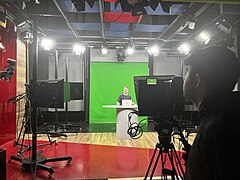
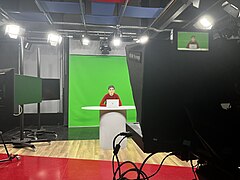
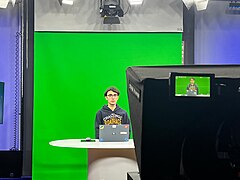
Following the Wikipedia 101 Education Set for Beginners, which was created as a result of a partnership established in the Let's Connect program, the Wikipedia 201 project was implemented by User:Kurmanbek (Y. Caner Özyayıkçı). Within the scope of the project, Wikipedians who volunteered from Wikimedia Community User Group Turkey participated in the shootings at RGB Studios within the Faculty of Communication of Istanbul Bilgi University. The videos were uploaded to Wikimedia Commons and WMTR YouTube account.
Students from RGB Studio took part in the shooting and editing process of the videos (Ahmet Buğra Çelik, C. Alim Sarı and Taylan Ukşal). Alim (User:Oxorca) opened a Wikipedia account for himself during the project process because it caught his interest, and now he also produces content as a Wikipedian. He also serves as the vice president of Istanbul Bilgi University Wikipedia Student Club.
Topics
Wikipedians contributed to the project and a total of 12 videos were shot:
- User:Kurmanbek - Introduction
- User:Zafer - Flickr to Commons, Wikidata language connection, Create a Wikidata object, Navigation template, Fair Use, Tables
- User:Kadı - User roles in Wikipedia, File renaming on Wikimedia Commons
- User:Sadrettin - Infoboxes, Categories and HotCat
- User:Adem - Talk pages
- Translator: User:ToprakM
-
 Zafer
Zafer -
 Adem
Adem -
 Sadrettin
 -
 Kadı
Kadı -
 Kurmanbek


Videos
-
Introduction
-
Fair use
-
Infoboxes
-
Language connections
-
Navgiation templates
-
File renaming
-
Flickr to Commons
-
Categories
-
User groups
-
Tables
-
Talk pages
-
Create a Wikidata object
Result
With this project, a education set was created where users who cannot attend face-to-face or online Wikipedia events can always find answers to their questions. Thus, knowledge equality, which is the main pillar of the Wikimedia Movement Strategy, was achieved. Together with Wikipedia 101, 201 has become a corpus about Wikipedia’s Turkish language. Also we are waiting with great excitement and happines for the Wikipedia 201 education set, consisting of a total of 12 videos, to be translated into other languages!
Read more

January 30th marked 20 years of Ukrainian Wikipedia. Traditionally the community, with the support of Wikimedia Ukraine, used this opportunity to celebrate, recruit new volunteers, and raise awareness of the Wikipedia model in the media.
The biggest project for Wikipedia’s birthday is our annual Wikimarathon, a campaign that aims to recruit as many new volunteers as possible with an online marathon and a series of offline events.
Wikimarathon 2024 took place from January 26 to February 4. 365 people, including over 100 newcomers, created their own article. Overall 900+ people participated in almost 50 events in Ukraine and for Ukrainians abroad.
Among the events outside Ukraine Poland stood out in particular with events in Warsaw, Kraków, Gdańsk, Łódź and Poznań. We also supported events in Lithuania, Switzerland, Norway, and the Netherlands.
Apart from Wikimarathon, we used the occasion to:
- Gather the community and celebrate our achievements. We had two meetups for the birthday – one online and one in-person in Kyiv. Participants networked, shared their stories, and competed in the quiz on the intricacies of Ukrainian Wikipedia's history
- Attract attention to Wikipedia and its unique volunteer-driven model in the media. We sent out a press release on January 30th and did a lot of media activity like interviews and TV comments around the birthday.
- Create and share instructional materials about Wikipedia, like our brief video answering 10 questions about Wikipedia and a set of infographics on 10 ways to help Wikipedia (inspired by 101 ways to contribute to Wikimedia).
- Wikimarathon events in Ukraine

_3.jpg)


- Wikimarathon events abroad


- Community celebrations


- By: Bojan Velkovski
Learn more how Macedonian Wikipedia celebrates the International Women’s Day by organizing several events and edit-a-thon.
Traditionally, the Macedonian Wiki community celebrates the International Women’s Day by organizing several events and edit-a-thon. This year, Wikimedia MKD organized an edit-a-thon on the topic ‘The Woman Throughout the History’, which was held on 7 March 2024.
The day turned out to be a busy one for the Macedonian Wiki community. Wikimedia MKD called all users on the Macedonian Wikipedia to take part in this edit-a-thon and write articles on the given topic. The users that took part in the edit-a-thon contributed with new content on the Macedonian Wikipedia, as well as improved the existing articles about significant women in Macedonia and the world.
Besides that, Wikimedia MKD organized two events, one in Skopje and one in Veles. The Wiki Club members from the High School ‘Josip Broz’ in Skopje visited the Museum of Macedonian Struggle in Skopje where the museum representatives lectured them on the famous Macedonian women in the history. They were walked through the museum and saw the exhibition. At the end of the event, the Wiki club members started editing on Wikipedia and published new articles about famous women.
The second even took place in Veles, where the coordinator Lili Arsova gathered the Veles Wiki Club members at the city library premises. In a similar way as the Skopje event, Veles participants edited on Wikipedia in Macedonian, created new content in Macedonian and improved the existing ones.
The final outcome of the day-long activity was 52 newly created articles on the Macedonian Wikipedia by 24 different Wikipedia users.
Wikimedia MKD wishes to all women in the world happy International Women’s Day.
-
 Walkthrough the Museum in Skopje and lecture on women throughout the history
 -
 Walkthrough the Museum in Skopje and lecture on women throughout the history
 -
 Working on articles, Skopje
 -
 Working on articles, Skopje


- By: Ivana Madžarević
During January and February, Wikimedia Serbia celebrated two birthdays - Wikipedia Day and 21st birthday of Wikipedia in Serbian, organized General Assembly, and realized an open call for microgrants. Within the Education Program, four collaborations were renewed, three new ones were established, and several Wikipedia editing workshops and one accredited seminar were held. In cooperation with the Wikimedia community of Republika Srpska and the "Svetozar Marković" University Library, WMRS coordinated in the #1Lib1Ref campaign. Serbian community contributed with almost 12,000 references in 3,645 articles which were the best results in the world. As part of the Diversity Program, the Wikigap campaign was prepared, as well as the second stage of the research project.
Education Program
Several collaborations from previous years have been renewed:
- Cooperation with the Faculty of Law of the University of Belgrade and the Serbian Red Cross in order to organize a workshop on the fight against human trafficking;
- Cooperation with the Technical School from Knjaževac has been renewed, within the framework of which students from several classes will undergo a Wikipedia editing workshop;
- Wikimedia Serbia has agreed to continue cooperation with the Faculty of Dramatic Arts in Belgrade on the Wiki student project;
- It was agreed to renew cooperation with the Faculty of Security of the University of Belgrade, within which students will write articles on Wikipedia on the topic of conflicts in the world and various databases on the same and similar topics.
Three new collaborations were also established:
- Cooperation with the Faculty of Computing and Informatics of the Union-Nikola Tesla University;
- Cooperation was achieved with the "Miloje Vasić" High School in Veliko Gradište;
- Cooperation was achieved with the Cervantes Institute in Belgrade in order to organize a joint workshop on editing articles about Spain on Wikipedia in the Serbian language.
An accredited seminar was held for teachers of several schools within the framework of cooperation with the Institute for Modern Education in Belgrade
GLAM Program
- In cooperation with the Wikimedia Foundation, a workshop was held for the global coordinators of the #1Lib1Ref campaign, which was attended by 35 participants. Wikimedia Serbia is the global and CEE coordinator of this campaign.
- Wikimedia Serbia, in cooperation with the Wikimedia community of Republika Srpska and the "Svetozar Marković" University Library, participated in the #1Lib1Ref campaign. Serbian community contributed with almost 12,000 references in 3,645 articles which were the best results in the world.
Diversity Program
- Wikimedia Serbia had an open call for microgrants to support projects in the field of free knowledge and culture, which lasted from January 22 to February 22. This competition is dedicated to smaller-scale projects that have the potential to become long-term and sustainable. During the call, 16 proposals were received, and the members of the commission worked on the preparation of the first round of selection, the results of which will be announced at the beginning of March.
- The second stage of the research project has begun, which is dedicated to the experience of new editors and aims to discover not only what it looks like, but also how it can be improved and be better.
- On the occasion of International Women's Day, the seventh Wikigap campaign was being prepared. Wikimedia Serbia organized this event in collaboration with the Wikimedia Community of Republika Srpska, the Autonomous Women's Center, FemPlatz, the Center for Women's Studies, and with the support of BeFem. The marathon was held on Thursday, March 7, in the premises of the Serbian-Korean Information Access Center. After the live event, participants can continue to write new and update existing articles online until March 15.
Organizational
- Wikimedia Serbia organized a celebration of Wikipedia Day. The president of WMRS, Miroslav Loci, spoke at the birthday party, and the award for Wikipedian of the year was also received, which for 2023 is shared by Ranko Nikolić, Vux33 and Nikolina Šepić. The 21st birthday of Wikipedia in Serbian was also celebrated in February.
- The thirty-first regular General Assembly of the Association was held during which the following decisions were adopted:
- Appointment of Filip Maljković as Vice President of the Association;
- Board Report for the year 2023;
- Financial report for 2023.
- By: Vyolltsa
From February to March, WoALUG organized the one-month Diaspora Edits Wikipedia Campaign. This aimed to promote the values and culture of Albanian articles by translating them into various foreign languages.
During the campaign, we had 7 editors translate several Albanian articles into foreign languages. Topics ranged from Albanian history, literature, cuisine, and traditions providing insights into Albanian culture to a broader audience. Participants learned how to enrich Wikipedia with Albanian perspectives improve the existing ones, and the addition of valuable references and citations.
Social media
- We have a public Telegram channel (language used mostly Albanian) if you want to join and discuss Wikimedia projects.
If you want to see more about our activities, you canː
- Like our Facebook page, follow us on X formerly Twitter Twitter or Instagram.

- By: Kurmanbek
Within the scope of the Wikimedia Japan - Turkey Friendship project, an edit-a-thon was held simultaneously on Japanese and Turkish Wikipedia.

Within the scope of the Wikimedia Japan-Türkiye Friendship project, which started on September 9, 2023, various events are being held for Wikipedians in Japan and Türkiye. The most comprehensive joint friendship edit-a-thon so far was held between February 5-11, 2024, simultaneously on Japanese and Turkish Wikipedia.
In the edit-a-thon, contributed by a total of 19 users, 61 new and 6 existing articles were worked on in Turkish Wikipedia. In Japanese Wikipedia, 13 new articles and 10 existing articles were worked.
At the end of the edit-a-thon, participants were given an e-certificate and a barnstar.
- Read more
- Wikimedia Japan-Türkiye Friendship edit-a-thon 5-11 February 2024 by User:Eugene Ormandy (English)
- Wikimedia Japonya-Türkiye Dostluk Vikimaratonu 5-11 Şubat 2024 by Eugene Ormandy, translated by User:Kurmanbek (Turkish)
- Outreach dashboard

- By: Anna Prodromou
Learn more about the HERitage Amplified event that happened in February in Nicosia, Cyprus, organized by the Wikimedia Community Cyprus.
Key highlights of the event included a Wikipedia Marathon (edit-a-thon) dedicated to Cypriot Women, insightful discussions on gender biases and digital literacy, along with two additional sessions after the event.
We are excited to share the success of the HERitage Amplified event, organized by the Wikimedia Community Cyprus and made possible through funding from the Wikimedia Foundation, following a proposal by Anna Prodromou.
Held on Saturday, 10/02/2024, the event was a resounding success, bringing together a diverse group of participants passionate about exploring the intersections of digital literacy, gender equality, and Wikipedia.
Key highlights of the event included a Wikipedia Marathon (edit-a-thon) dedicated to Cypriot Women, insightful discussions on gender biases and digital literacy, and keynote speeches by esteemed speakers Barbara Klen from CEE Hub, Michael Tyrimos from Capacitor Partners, and Marios Magioladitis from Wikimedia Community User Group Greece. We had the pleasure also to have Philip Kopetzky, CEE Hub Steering Committee member participating in a panel discussion along Barbara Klen and Marios Magioladitis. The event was addressed by Ms. Annita Demetriou, President of the Cyprus Parliament, who held the event under her auspices, and Ms. Josie Christodoulou, Commissioner for Gender Equality, who supported the event.
As a follow-up to the main event, we hosted two additional sessions:
- 13 February 2024: A live online discussion forum, followed by a collaborative editing session, provided participants with further opportunities for engagement and learning.
- 17 February 2024: We celebrated and recognized participants' achievements during the last Collaborative Editing Session.
The event exemplified the power of collaboration, community engagement, and collective action in advancing gender equality and cultural diversity on Wikipedia.
We extend our gratitude to the WICZ+ Foundation and the University of Limassol for their support in making this event possible.
Whole gallery of the images from the event you can see on the following link.


- By: Lvova Anastasiya
Through collaborative efforts, North-West Russia Wiki-Historians User Group aim to preserve the diverse essence of the Northwestern territories, weaving together narratives that span urban centers and rural landscapes, ensuring that the legacy of the region endures for generations.

Map of objects affected by the marathon
― созданная статья / created article (37)
― улучшенная статья / improved article (33)
― переведённая статья / translated article (3)
― совместная работа / collaboration (1)
The largest and most known city within the territory of North-West Russia Wiki-Historians User Group interests is Saint Petersburg. It is a large city, well-documented in sources, and serves as a frequent meeting point (two meetings have taken place since the last Newsletter). Photographs of its landmarks have high chances of winning in the Wiki Loves Monuments competition. However, the group's focus isn't solely on Saint Petersburg; instead, we make special efforts to describe the entire NW region's territory on Wikipedia. In February to early March, the annual Winter Marathon of the user group took place, dedicated to writing articles about the district centers of the Northwest that are not capital cities. Within the marathon, 37 articles were created, 34 were significally improved, and 3 articles were translated into Erzya (for comparison, during the same period outside the competition, at least 25 articles about Saint Petersburg were created by the user group members, with at least four translated into English). The marathon's winner created a core set of articles about Opochka, the small old town in the Pskov Oblast. This place was almost not represented in Wikipedia, but now this omission has been corrected.
Крупнейшим и известнейшим городом на территории охвата юзер-группы Краеведов Северо-Запада является Санкт-Петербург. Это большой и хорошо описанный в источниках город, в нём хорошо встречаться (с прошлого выпуска подборки новостей состоялось две встречи), фотографии его достопримечательностей с высокими шансами побеждают на фотоконкурсах «Вики любит памятники», но юзер-группа собралась не вокруг него и предпринимает особые усилия по описанию в Википедии всей прочей территории своего охвата. В феврале-начале марта состоялся ежегодный Зимний марафон юзер-группы, посвящённый написанию статей о районных центрах (и других городах) Северо-Запада, не входящих в число столиц региона. В рамках марафона было создано 37 статей, улучшено 34, и 3 статьи переведено на эрзянский язык (для сравнения, за тот же период вне конкурса только в рамках юзер-группы было создано не менее 25 статей о Санкт-Петербурге и переведено на английский не менее четырёх). Победитель марафона создал корпус статей о городе Опочка, находящемся в Псковской области. Этот старинный городок до того был почти не представлен в Википедии, но теперь это упущение исправлено.

- By: Vyolltsa
Contributors from Albania and Kosovo put their efforts into creating encyclopedic articles about various villages in Albania and Kosovo.
29 editors embarked on a campaign developed by Wikimedians of Albanian Language User Group from January 15th until February 16, 2024
During this time, contributors put their efforts into creating encyclopedic articles about various villages in Albania and Kosovo.
On February 6th, an offline editathon was organized in both Kosovo and Albania, bringing people together to write about villages in our two countries. Special participants this time were activists from the Rural Youth Hub in Albania organization and efforts of the Roskovec Municipality in Albania for their initiatives aimed at integrating young people into rural society.
As we celebrate the success of this campaign, we also look forward to continuing our efforts to promote awareness and appreciation of the village heritage.
Some statistics from the overall campaign:
- Editors: 29
- Wikipedia: 56 articles edited/ created
- Wikimedia Commons: 78 uploads
- Wikidata: 1.9K total revisions


Social media
- We have a public Telegram channel (language used mostly Albanian) if you want to join and discuss Wikimedia projects.
If you want to see more about our activities, you canː
- Like our Facebook page, follow us on X formerly Twitter or Instagram.

- By: Ivo Kruusamägi
The European Parliament has now adopted the anti-SLAPPs Directive (aka Daphne’s law). But what are the SLAPPs, how they might affect Wikimedia and how should we handle them in the CEE region?
SLAPP suits or Strategic Lawsuits Against Public Participation are "lawsuits intended to censor, intimidate, and silence critics by burdening them with the cost of a legal defense until they abandon their criticism or opposition" as we might read from the English Wikipedia. In short: that is a method of drowning your opponents into a legal concrete.
Where it really gets interesting is that in addition to all the journalists and human rights defenders, sometimes even Wikipedians get sued. In the CEE region, the two examples might be when Ivo Kruusamägi got sued by an Estonian businessman and Toni Sant was officially threatened with a lawsuit by a Maltese writer. These are just more known cases and there are even more in Western Europe.
To stop this misuse of the legal system, the European Parliament has adopted this new directive, however, it is the implementation that matters. Will it be written into member state laws in ways that would really protect the free sharing of information? Will it have only an effect on cross-border cases when most of the legal cases are within one country (like the two examples provided above)? It is suitable to remind that information does not know borders and if sharing of information could be blocked in one country, it may never reach the others.
There are many ways of making the legislation weaker or stronger. Civil society has a lot to gain only if the directive is implemented in a stronger way. For that reason, Wikimedia organizations should also have a say on this. So spread the information, show up as public watchdogs and also voice our concerns.
While writing this article, out of all the CEE countries there are Wikipedia articles on SLAPP only in Bulgarian, Chech, Estonian, German, Greek, and Russian. That doesn't leave the impression that we are putting as much attention to this as we should. Especially, at a time when public servants might be looking for this information, we should make sure there is sufficient and high-quality information readily available. It is easier to make good legislation if people know what they are dealing with.
Better access to information on the topic might lead to better legislation. The time to act is now! Help to share the information both online and offline. Let’s draw attention that the SLAPP protection must cover all cases and should also apply within countries.
See also the post by Wikimedia Europe. That also points out to recommendations by coalition against SLAPPs in Europe that we should just as well pay attention:
- Early dismissal mechanism
- Definition of cross-border dimension
- Compensation of damages
Cover photo: Michele Failla and Ivo Kruusamägi in Palace of Europe right before Coalition Against SLAPPs in Europe event this February to draw attention that even Wikipedias might get SLAPPed and would therefore need some protection.

- By: Beko
From February 8, Wikimedia Armenia started an internship of the senior students from three Armenian universities. Students from two faculties of the Brusov State University, faculty of English Language, German Language and Communication of Yerevan State University, as well as students from three departments of the Faculty of Humanities of YSU Ijevan Branch began their internship under the guidance and help of Wikimedia Armenia employees.
146 students registered on Wikipedia, learned to create articles on Armenian Wikipedia, and afterwards began creating new articles by translating from different foreign languages or using sources. Internships will end in March, and the results will be summarized that month.
Brusov State University
The internship with this university started on February 12. In total, 86 students from Translation and Intercultural Communication, as well as seniors of the faculties of Russian and Foreign Languages visited the office of Wikimedia Armenia twice a week and participated in the course (each session lasted 2 hours). During the first two meetings, the staff introduced them to Wikipedia's basics, editing tools, and from the third meeting, the students started writing articles on the Armenian Wikipedia. They did translations from English, Chinese and Korean Wikipedias, vital articles are translated from English. The internship lasted for more than a month and ended on March 19.
Faculty of English Language, German Language and Communication, Yerevan State University
The internship of students from this university also started on February 12. Five students in their senior year attended the course with the same frequency and workload as the students of the Brusov State University. They did translations from English Wikipedia translating from the list of vital articles.
Yerevan State University Ijevan Branch
The internship with this university was launched on February 8 in Ijevan, Tavush region. The employees of Wikimedia Armenia NGO had a two-day visit in Ijevan, where they held 4 classes with students, introducing them to the basics, editing tools and guidelines of Wikipedia. In the following weeks, online meetings were held, during which students presented their work, and changes were made to published sandboxes and articles. A total of 55 students of the Departments of Armenian History and Social Sciences, Armenian Language and Literature, and Foreign Languages of the Faculty of Humanities are participating in the internship. They do their translations from English, Russian and French Wikipedias, as well as create and improve articles using Armenian printed sources. The internship will end on March 21.


.jpg)
- By: Vyolltsa
Our User Group is extending the latest developments in an effort to promote the Wikimedia Movement and Education in Wikipedia within education partnerships in Elbasan, Albania. The engagement from students and teachers has been truly inspiring.
Wikiclubs flourishing with several schools
Starting from 2023, our User Group is collaborating with three 9-year elementary local schools as wikiclubs. These wikiclubs serve as creative places for students to explore Wikipedia, Wikidata, and Wikimedia Commons. In the meantime, they are increasing their digital literacy skills and learning what the free source platforms are. Teachers are guiding students on how and where to focus in order to improve the free content. The participating schools have adopted this initiative, providing students with ways to enhance critical thinking and collaborative abilities, as well.
The Wikeys game is used as an icebreaker with young students
With Arianiti Non-Public school, we have implemented the Wikeys game as an icebreaker, which led to the wikiclub establishment. Students play the Wikeys whenever they are in class to understand the pillars of Wikipedia, encourage their creativity, and impact their contribution to mostly editing articles on Wikipedia.
Editathon with the Aleksandër Xhuvani University in Albania
In partnership with Aleksandër Xhuvani University Linguistic Department, we developed one editathon to enrich articles about renowned linguists in Albania. 10 editors worked on improving and creating articles on Wikipedia, and edited and created items on Wikidata. This collaboration helped us reach a university community and used references and materials produced by the University in order to illustrate the shared knowledge.
Wikipedia:
- 10 editors
- 8 articles created
- 17 articles edited
Wikidata:
- 95 total revisions
Upcoming editathon with 2 high schools in Elbasan
At the moment, we are in the process of planning an upcoming editathon with 2 high schools in Elbasan, Kostandin Kristoforidhi and Luigj Gurakuqi High Schools. We believe this editathon will equip and empower students with skills by translating and improving articles on Wikipedia and Wikidata. More information will provided after this event.

- By: Vyolltsa
In 2024, WikiGap Tirana event delved more into bridging the gender gap on women in entrepreneurship in Albania and Sweden. For the 7th year, WikiGap event took place at the Swedish Embassy in Tirana with 10 women to contribute to the visibility and representation of women entrepreneurs on SqWikipedia. The event shed light on the achievements and business women from Albania and Sweden.
For 3.5 hours, all the participants worked on translating and editing Wikipedia articles resulting in a total of 13 new articles and editing 14 articles.
During the event, as a group we discussed the importance why women should focus on encyclopedic content creation for women by women; and increase the network exchange among women participants and create connections and collaborations with one another.


Social media
- We have a public Telegram channel (language used mostly Albanian) if you want to join and discuss Wikimedia projects.
If you want to see more about our activities, you canː
- Like our Facebook page, follow us on X formerly Twitter or Instagram.

- By: Vyolltsa
Some of the WoALUG’s recent activities in Elbasan and Gramsh, that support knowledge-sharing and collaboration in the school setting, came about throughout February.
Editathon with Luigj Gurakuqi and Kostandin Kristoforidhi High Schools
One editathon event in Elbasan brought together a total of 16 students on February 24th from local high schools, Luigj Gurakuqi and Kostandin Kristoforidhi. They translated and edited articles on Wikipedia, and also explored the functionalities of Wikidata. Students worked on a diverse range of topics such as, Women’s Rights, Innovation and Technology, Sustainable Development Goals, Artificial Intelligence and Sports resulting in editing 31 articles on Wikipedia.
Career education through Wikipedia
In addition to the editathon, WoALUG has activated the Career Education sessions with Dhaskal Todri High School in Elbasan. Through these guided sessions, students will be equipped with the skills to navigate Wikipedia, identify information related to their career interests, and critically evaluate sources.
On the other side, these career education sessions offer students the opportunity to contribute to Wikipedia by creating and editing articles related to their fields of interest. By participating in editing activities, students will enhance their digital literacy skills and make contributions to Wikipedia. More sessions are on their way.
Empowering Ali Agjahu with Wikipedia: A Year of the Albanian Language Celebration
With Ali Agjahu 9-year elementary school, our User Group is empowering students to integrate Wikipedia as a valuable tool in their participation in the competition for the Year of the Albanian Language celebration. As part of this yearly celebration, schools across Elbasan are engaged in projects and competitions centered around the Albanian language.
At Ali Agjahu School, we are assisting students with Wikipedia to edit and improve articles on Wikipedia, with a focus on renowned figures in Albania. This school is using Wikipedia to help students deepen their understanding of Albanian language and culture and enhance the media literacy skills.
Coding classes with Wikidata focus
Since the beginning of January we are collaborating with Asllan Shahini School in Gramsh, where students are actively engaged in coding classes. We are focused on integrating Wikidata into their projects. So far, students have learned to use Wikidata, Wikipedia and Wikimedia Commons. We are still in progress with many opportunities for further learning.
Some pictures from all the collaborations.


Social media
- We have a public Telegram channel (language used mostly Albanian) if you want to join and discuss Wikimedia projects.
If you want to see more about our activities, you canː
- Like our Facebook page, follow us on X formerly Twitter Twitter or Instagram.

- By: Zolfeqar
In Dushanbe, Tajikistan, a lively celebration took place at the "Atlas" hotel, marking a significant milestone: the 20th anniversary of Tajik Wikipedia. Wikimedians from all over the country gathered to honor two decades of collaborative knowledge sharing and to make plans for the platform's future growth.
The event started with warm welcomes from the organizers, emphasizing Tajik Wikipedia's significant role in spreading information and access to free knowledge in the Tajik language. During the celebration, users and guests discussed the achievements of Wikipedia in the past years, dealt with current problems, and made plans for its future. One of the main things they wanted to do at the gathering was to attract more people to use and edit Tajik Wikipedia. It should be noted, that when more people or users come for editing will be a great opportunity to edit more articles and correct mistakes. Additionally, they believed that bloggers and popular Instagram users could play a vital role in promoting Tajik Wikipedia and encouraging people to join in.
An important event highlight was when a group from the Bloggers Association of Tajikistan showed up. They promised to support by making more advertisements and creating online contests to spread the word about Wikimedia locally. The bloggers promised to use their websites to attract new members, promoting collaboration and involvement.
To make knowledge more accessible, the event organizers asked O Mobile, a major internet and communication service in Tajikistan, for help. They wanted the company to allow people to use Wikipedia for free. This would reduce the cost of data and inspire more individuals to learn and support it. The initiative also included assistance for editors and users navigating the online space.
As the celebration finished, everyone focused on the future with optimism. The Tajik Wikipedia community is now more committed than ever to being inclusive and trying new things. They want to create a lively online community that brings people together worldwide to collaborate and share knowledge. In addition to the festivities, the Tajik Wikipedia community announced in February with great news that Tajik Wikipedia will be a guest participant in CEE Spring 2024. This achievement demonstrates the growing significance of Tajik Wikipedia in the region as well as its commitment to promoting cross-cultural communication and collaboration.
As Tajik Wikipedia enters its next phase, the community remains united in its mission to empower individuals, protect cultural heritage, and promote free knowledge in a globalized world. With determination and solidarity guiding them, Tajik Wikipedia is ready to continue shaping the digital environment for the next generations